
What is the Role of Digital Technologies in Education?
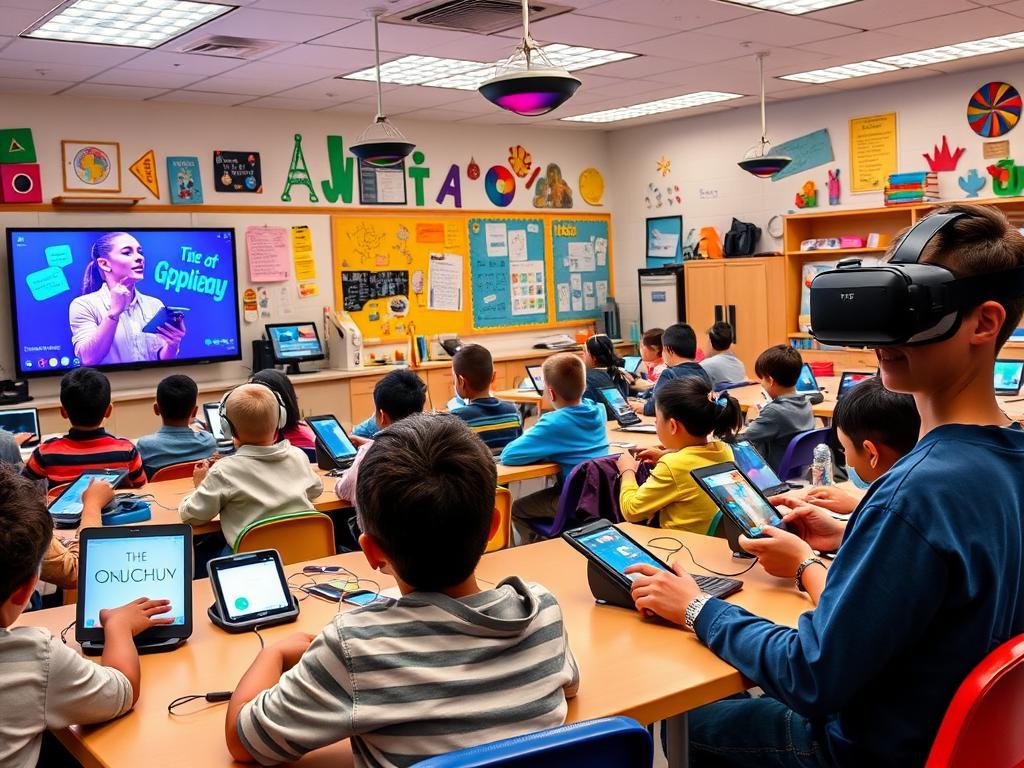
What is the role of digital technologies in education?Have you ever wondered how digital technologies can they change education? They modernize teaching, improving student performance. The technologies digital technologies make teaching more dynamic, adapting to the digital generation.
Digital technologies can be used inside and outside the classroom. They make teaching more effective by increasing the student engagement. Let's explore how these technologies can change your educational experience.
Introduction to Digital Technologies in Education
The term digital technologies in education refers to innovations for the classroom. They help learning by making teaching more efficient. A adoption of digital technologies in education renews ways of teaching. This makes teaching more dynamic and meets the needs of today's students.
Definition and Importance of Digital Technologies
The digital technologies in education include many features. From overhead projectors until chatbotsThey make teaching more interactive. This helps engage students and meets their current needs.
Impact on Traditional Education
O student profile has changed a lot. The new generations, born connected, no longer adapt to traditional teaching. To capture the students' attention and interest, o teaching model needs to reinvent itself and evolve. This includes using the digital technologies and modernize education.

"The adoption of digital technologies in education implies a renewal of teaching methodologies in order to make them more dynamic and compatible with the new student profile."
Transforming Teaching Methodologies
The digital technologies changed teaching. Classes are now dynamic and interactive. This makes more engaging learning and effective for the students.
Dynamic and Interactive Teaching
Teachers use digital technologies in their classes. They use videos, music and interactive presentations. This makes the classes more attractive, stimulating the active participation of the students.
Adapting to the Generations of Digital Natives
The new generations of students are different. They have grown up with internet. This is why teaching methodologies must be adapted to them, using more attractive approaches.
Integrating digital technologies to teaching, teachers create more engaging learning experiences. This is important for digital natives. And it promotes innovation in teaching that meets the needs of this generation.

Examples of Digital Technologies in Education
Digital technologies are in many classrooms. They help teachers make lessons more dynamic. Overhead projectors e digital whiteboards are examples. They allow teachers to be creative, saving time and helping students to understand better.
Overhead projectors and digital whiteboards
The overhead projectors and the digital whiteboards change how teachers teach. They create digital presentations interactive. This captures the students' attention and makes learning easier.
Chatbots and Artificial Intelligence
The chatbots and artificial intelligence are very promising in education. They allow students to ask questions and revise content whenever they want. This helps with autonomous and personalized learning.
Virtual Learning Environments (VLEs)
The Virtual Learning Environments (VLEs) are digital platforms for teaching. They allow teachers to make content and activities available. This helps keep track of students' progress, both online and in person.
These technologies are essential for improving teaching. They help to engage digital natives today.
What role do digital technologies play in education?
Digital technologies are essential for changing teaching. They make lessons more dynamic and interactive. This helps to teach in a way that students in the digital age can better understand.
With features such as overhead projectors and chatbots, teaching becomes more engaging. This helps to meet students' needs. A transforming education digital technologies bring important benefits.
- More interactive and dynamic classes, using multimedia content and collaboration tools;
- Personalized teaching, with activities and materials adapted to the pace and profile of each student;
- Greater engagement and motivation among students, who feel more connected to the learning process.
This change not only improves academic results. It also prepares students for the future. They are better prepared for the job market and the digital society.
| Technology Digital | Impact on education |
|---|---|
| Overhead projectors e Digital whiteboards | They make it easier to visualize content and interact during lessons |
| Chatbots and Artificial Intelligence | They offer personalized support and immediate responses to students |
| Virtual Learning Environments (VLEs) | Allow access to content, activities and collaboration at a distance |
In short, digital technologies are essential for changing teaching. They make learning more engaging and personalized. This meets the needs of the digital generation.
Benefits of Digital Technologies in Education
The use of digital technologies in education brings many benefits. They improve teaching and learning. With technological resources, teachers create innovative teaching methodologies. This makes students more engaged and better at learning.
Increased Student Engagement
Digital technologies make lessons more interesting. They make students feel more motivated. With digital resources in teachingsuch as gamesthe students get more involved in class.
Facilitating Learning
Digital technologies offer many digital resources in teaching. Videos, animations and interactive exercises make learning easier. This makes teaching more dynamic and interesting for students.
Improved Academic Performance
Studies show that digital technologies in education improve academic performance. This is because students are more engaged and learn better. The adoption of innovative teaching methodologies also helps a lot.
"Digital technologies have the power to transform the way we learn and engage with knowledge."
| Benefits | Description |
|---|---|
| Increased Engagement | Digital technologies make classes more attractive and interactive, increasing student participation and interest. |
| Facilitating Learning | The diversity of digital resources, such as videos and simulations, makes the content more understandable and facilitates the learning process. |
| Improved Academic Performance | Studies show that the use of digital technologies in education is related to better student academic performance. |
Teacher Training for the Use of Technology
To use the digital technologies well in the classroom, teachers need to training. They must learn to use these tools safely and effectively. This teacher training helps to integrate technologies into the curriculum and teaching methodologies.
A teacher training for the use of digital technologies should cover several points. This includes:
- Familiarize yourself with the different technologies and their functions;
- Learning to use technology in teaching practice;
- Understand the effects and advantages of technologies in teaching and learning;
- Develop strategies to create dynamic and interactive lessons with digital resources.
It is crucial that this teacher training be continuous. This allows teachers to keep up to date with the latest developments. technological innovations. Thus, they are ready for the challenges of digital education.
"Teacher training in the use of digital technologies is fundamental for the integrating technology into teaching practice is effective and brings positive results for the students' learning."
When teachers are good trained to use the digital technologiesthey can exploit their potential. Thus, they can transforming the learning experience of the students. Learning becomes more engaging, personalized and effective.

Investment in Technological Infrastructure
To use the digital technologies in education, it is crucial to invest in infrastructure. This involves buying computers, tablets, digital whiteboards and others digital resources in schools. It is also essential to have a good internet connection to guarantee the access to technology in educational institutions.
Many schools face challenges investing in technology. They have old equipment, slow internet and a lack of maintenance. This makes it difficult to integrate technology into lessons.
However, it is vital to understand that investment in technology is essential. It allows students to benefit from digital technologies in education. This improves student engagement and performance, as well as making teaching more dynamic.
"Access to technology in schools is a right for pupils and a duty for public authorities. Without adequate investment, educational institutions become hostages to technological backwardness."
It is essential that schools and education systems see the investment in technological infrastructure in education as a priority. In this way, all students will have the chance to benefit from the digital technologies in schools.
| Equipment | Importance | Investment required |
|---|---|---|
| Computers | Access to digital resources and the internet | R$ 2,000 to R$ 5,000 per unit |
| Tablets | Mobility and interactivity | R$ 1,000 to R$ 2,500 per unit |
| Digital whiteboards | Dynamic and collaborative classes | R$ 5,000 to R$ 15,000 per unit |
| Internet connection | Access to content and online resources | R$ 200 to R$ 500 per month |
Risks and Challenges of Using Digital Technologies
The use of digital technologies in education brings many benefits. But there are also challenges that must be overcome. One major challenge is to ensure that students use these technologies safely and consciously.
A security digital at school is crucial. It protects students from inappropriate content, cyberbullying and other online threats. This is essential for student safety.
Another major challenge is digital inclusion of all students. Not everyone has easy access to quality devices and internet. This can create inequalities in access to learning opportunities. digital learning.
In addition, it is important to constant teacher training. They need to learn how to use technology in a pedagogical way. In this way, they can promote conscious use of technology by the students.
| Challenge | Description |
|---|---|
| Digital security | Ensuring the safe and conscious use of digital technologies by students, protecting them from inappropriate content, cyberbullying and other online threats. |
| Digital inclusion | Ensure that all students have access to quality devices and internet connections, avoiding inequalities in access to educational opportunities. digital learning. |
| Teacher training | Offering constant training to teachers so that they can integrate digital technologies in a pedagogical and meaningful way, promoting the conscious use of technology by the students. |
By tackling these challenges, schools can make the most of the digital technologies in education. Thus, they guarantee a conscious and safe use of these tools by the students.

Conclusion
Digital technologies are essential for changing teaching. They make lessons more dynamic and interactive. This helps students in the digital age to learn better.
When used correctly, these technologies greatly improve learning. They increase student engagement and help improve school results.
For this to work well, it's important to invest in technology and train teachers. In this way, technologies are used safely and effectively. This guarantees a better future in education, adapted for the digital generation.
It is crucial that schools and universities adapt to this digital shift. They must invest in infrastructure and train teachers. That way, students will have a modern and engaging learning experience.
FAQ
Q: What role do digital technologies play in education?
A: Digital technologies are essential for modernizing education. They help improve student performance. They make teaching more dynamic and attractive for the digital generation.
Q: How can digital technologies make classes more efficient?
A: They make lessons more interesting and interactive. It increases student engagement. This improves learning and academic performance.
Q: What are the main examples of digital technologies applied to education?
A: Examples include overhead projectors, digital whiteboards, chatbots and Artificial Intelligence. There are also Virtual Learning Environments (VLEs). These tools enrich teaching.
Q: What are the benefits of using digital technologies in teaching?
A: The benefits are many. Student engagement increases, learning becomes easier. And academic performance improves. The technologies make the content more attractive.
Q: What challenges and risks can the use of digital technologies in education present?
A: Challenges include the safe use of technology by students. All students need to be included. And teachers need to be kept up to date. It's essential to invest in infrastructure and teacher training.







 Portuguese
  English