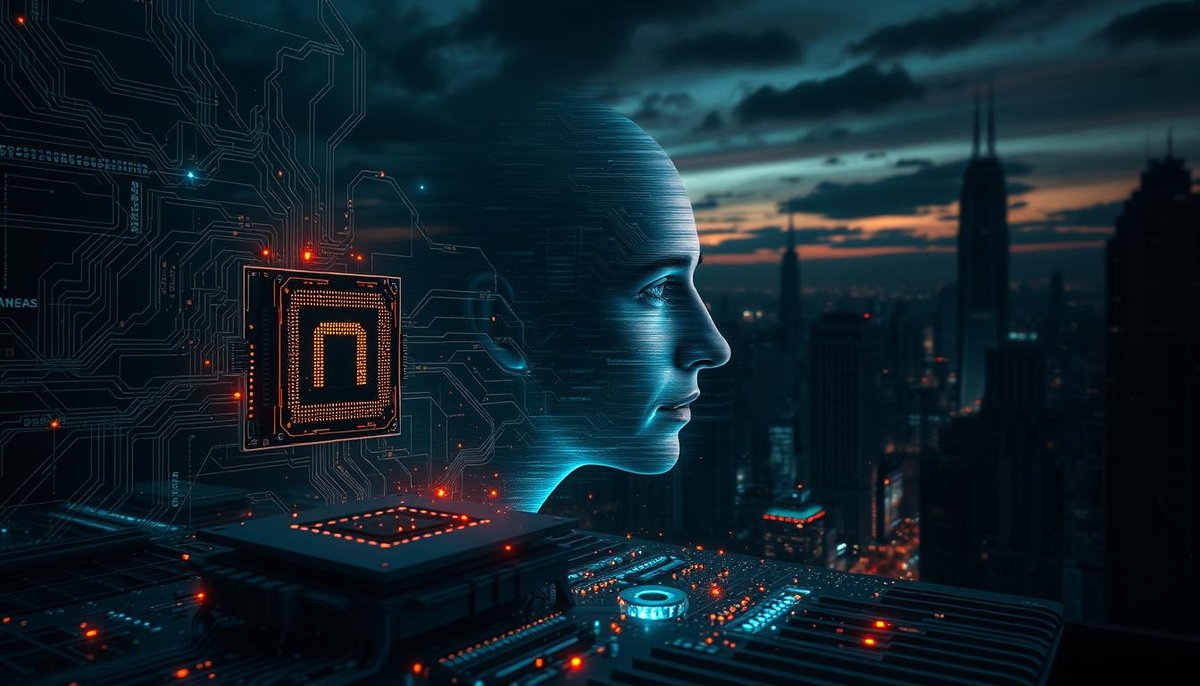
Deepfake Technology Scary or Incredible: Imagine a technology that can create videos and voices that are almost identical to the real thing. Would you be able to tell the difference? A deepfake technology está revolucionando a internet, misturando criatividade e riscos de um jeito que nunca vimos antes.
With artificial intelligencemanipulated videos and cloned audios have become so realistic that even experts have trouble identifying them.
Um exemplo? Celebridades aparecendo em cenas que nunca gravaram ou vozes de familiares usadas em golpes. Tudo isso é possível com algoritmos que aprendem padrões humanos em minutos.
But it's not just about deception. This innovation also opens doors to entertainment and education, making it possible to recreate stories or voices of historical personalities.
The problem arises when use of these tools goes beyond ethical limits, spreading disinformation on a global scale.
In this articleyou will discover how these features work, their impact on world and why it's crucial to question what you see online. Ready to explore this phenomenon that is transforming the way we consume content?
What is Deepfake? Discover the Fundamentals of this Technology
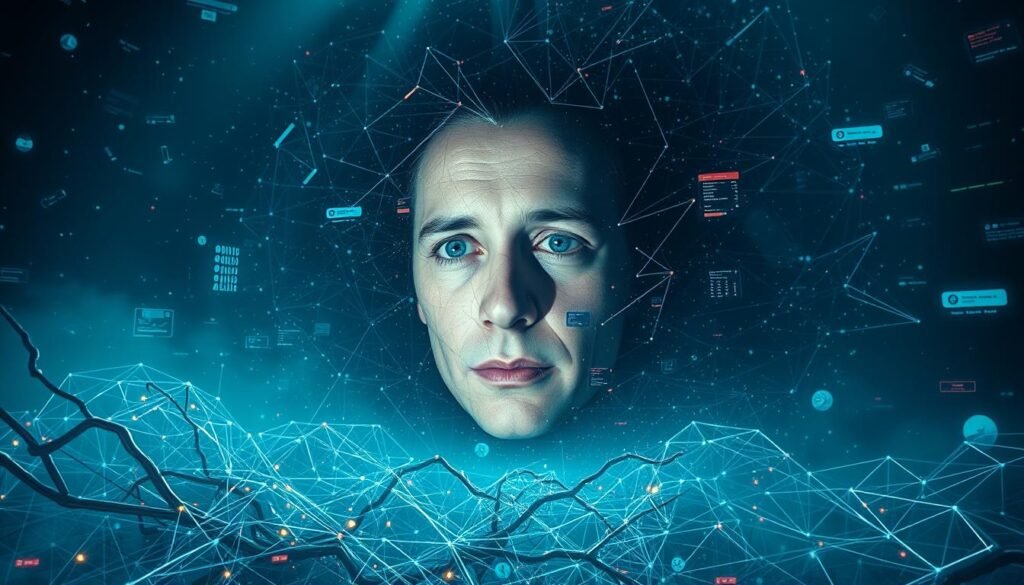
Have you ever come across a video on the internet and wondered if it was real? This type of material can be the result of deep learningA method that analyzes patterns in data to recreate faces, gestures and even voices with impressive accuracy.
Definition and Functioning of Artificial Intelligence
The basis of these creations is artificial intelligence. Algorithms study hours of recordings to mimic facial expressions or vocal intonations.
A system, for example, can replace an actor's face in an old scene or generate speeches that have never been spoken.
"These tools are like paints: they can create art or tarnish reputations," comments an expert in the field. AI.
Practical Examples: Manipulated Videos and Audios
One famous case involved an international politician whose voice was cloned to ask for fraudulent donations. Another example is the digital insertion of artists into finished films, reviving characters in a hyper-realistic way.
| Type | Features | Examples |
|---|---|---|
| Video | Changing faces or lip movements | Celebrities in fictional settings |
| Audio | Voice cloning with realistic intonation | Fraudulent phone calls |
Entertainment platforms already use these features for automatic dubbing, while criminals take advantage of them to social engineering. The line between innovation and risk has never been so blurred.
deepfake technology: Impact on society and the Internet
Have you ever thought about receiving a call from a relative asking for money, but it wasn't their voice? This is a growing reality. The combination of images e audios synthetic creates scenarios where even experts hesitate to separate fact from fiction.
When Hearing and Seeing Are No Longer Believing
Financial scams using voice have increased by 650% in the last year, according to research. Criminals recreate vocal tones with just a few seconds of recording, fooling even those who know them well. person.
A recent case involved a falsified audio of an executive authorizing illegal transfers.
Young people are especially vulnerable: 68% do not identify contents altered on social networks. Videos with invented speeches by influencers generate likes and shares, spreading incorrect data as truth.
The Domino Effect of Mistrust
Fake news with images The manipulation of authorities undermines credibility in institutions. In 2023, a doctored video of a politician receiving bribes caused protests before the elections - even after the fraud was discovered, the damage had already been done.
“A tecnologia avança, mas a educação digital não acompanha. Precisamos ensinar a questionar antes de compartilhar”, alerta uma pesquisadora de segurança cibernética.
Platforms are starting to use authenticity seals, but the solution lies in the combination of tools techniques and a critical sense. After all, in a world where seeing is no longer believing, your attention is your first line of defense.
Innovative Applications: Positive Uses of Deepfake
Beyond the challenges, this digital innovation shows the potential to positively transform a number of areas. Health campaigns and educational projects are already using tools of media synthesis to engage the audience of creative mode.
One example? Videos with historical figures "revived" to explain complex topics in schools.

Social Awareness and Health Campaigns
The UN recently launched an initiative using voices summaries of global personalities in 12 languages. The aim? To warn about climate change with messages adapted to each culture.
In hospitals, realistic simulations help train professionals without exposing real patients to risk.
In art, European museums have recreated speeches by deceased artists using old recordings. This allows new generations to "hear" 19th century poets with original intonation.
In education, teachers use contents where students interact with historical figures in real time.
"The multilingual adaptation of these tools breaks down barriers and democratizes access to information," says a spokesperson for the social project.
In medicine, researchers are testing algorithms to generate images of rare symptoms. This speeds up the training of diagnostic systems by intelligence artificial, reducing dependence on real clinical cases. Each advance shows how responsible use can benefit society and science.
Ethical and Legal Risks and Challenges in the Age of Deepfakes
Did you know that a fake video can influence elections in a matter of hours? The speed with which contents The spread of manipulated data requires new forms of legal and digital protection.
Platforms and governments are racing against time to create mechanisms that identify counterfeits before they cause irreparable damage.
Difficulties in Detecting and Combating Disinformation
Identify a video changed requires specialized tools. Even so, 73% of the platforms do not have automatic systems for analyzing files in real time. This allows lies to go "viral" before they are checked.
A recent report shows that 58% of Brazilians have already shared information without knowing it. The combination of realistic audio e image convincing confuses even experienced users.
Legal Aspects and Rules in Electoral Contexts
In 2024, the TSE banned the use of deepfakes in election campaigns. Candidates who use these tools can have their registrations revoked and pay fines of up to R$ 500 thousand.
Social networks are also responsible for removing fraudulent material within 2 hours of a report.
"Legislation needs to evolve at the same speed as manipulation techniques," says a lawyer specializing in digital law.
Protecting Children and Young People in the Digital Environment
Young people between the ages of 12 and 17 are the most exposed to contents falsos. Estudos indicam que 81% deles não verificam a fonte antes de compartilhar. Projetos de educação midiática nas escolas surgem como alternativa para desenvolver senso crítico desde cedo.
Parents can activate filters on apps to block certain types of media. But experts warn: the best protection is still the constant dialog about the risks of the online world.
Conclusion: Deepfake Scary or Incredible Technology
In today's digital landscape, the line between reality and fiction has never been so blurred. As we have seen artificial intelligence allows everything from educational projects with historical figures to scams that exploit the voice of family members. The key is to balance innovation with responsibility.
Data shows that content manipulated affects everything from elections to personal relationships. But there is also light: museums revive deceased artists and hospitals simulate rare cases for training purposes.
Each advance requires new forms of verification - such as authenticity seals on videos.
Fighting disinformation requires joint action. Platforms must prioritize rapid detection, governments need to update laws, and users need to check sources before sharing. A 2024 report reveals: 60% of Brazilians have doubted information online.
“A solução não é proibir, mas educar. Ferramentas evoluem, mas o senso crítico é a melhor defesa”, destaca uma especialista em ética digital.
This article showed how these resources shape our world. Now it's your turn: question, research and demand transparency. After all, in the age of Artificial intelligenceYour attention is the most powerful filter against digital illusions.
FAQ
Q: What is deepfake and how does it work?
A: It's a technique that uses artificial intelligence algorithms to create or alter videos and audio, making it appear that someone said or did something that didn't happen. Tools such as DeepFaceLab analyze patterns in images and sounds to generate realistic results.
Q: What are the risks associated with manipulated videos?
A: They can spread disinformation, such as fake news, or facilitate scams, such as voice cloning to trick people. In 2023, a fake audio of a Brazilian politician circulated on the networks, showing how serious the problem is.
Q: Are there any positive uses for this technology?
A: Yes, companies like Synthesia use similar resources to create educational campaigns or train professionals. It also helps to raise awareness of diseases, such as videos showing the consequences of smoking.
Q: How do I identify fake content on the internet?
A: Pay attention to details: eyes that don't blink, robotic voices or strange synchronicity between audio and image. Tools such as Intel's Detect Fakes or the University of São Paulo's (USP) project help with verification.
Q: Are there laws to combat abuses of this innovation?
A: In Brazil, the Superior Electoral Court (TSE) prohibits the use of altered materials in political campaigns. Globally, platforms such as Meta and YouTube require creators to mark synthetic videos with warning labels.
Q: How can children and young people be protected from online risks?
A: Talk about the dangers of believing everything they see on the internet. Use parental control apps, such as Google Family Link, and teach them to check sources before sharing information.