
Deep Learning The Brain Behind Modern AI

Deep Learning The Brain Behind Modern AI: Deep Learning é um campo da Inteligência Artificial (IA) que se destaca por sua habilidade de fazer computadores aprenderem e tomarem decisões de maneira semelhante ao cérebro humano. Utilizando redes neurais artificiais, essas tecnologias conseguem processar e interpretar grandes volumes de dados de forma eficiente. Este artigo explora os fundamentos, a evolução, os desafios e as aplicações do Deep Learning, além de discutir como essa abordagem se relaciona com a Inteligência Artificial Geral (AGI) e as estruturas de aprendizado de máquina inspiradas no cérebro.
Key learnings
- Deep Learning uses artificial neural networks to mimic the workings of the human brain.
- The evolution of Deep Learning has its roots in the first neural network models and advanced significantly in the 2000s.
- Building brain-inspired AI systems faces challenges such as computational complexity and the need for large volumes of data.
- O algorithm BackPropagation is crucial for training deep neural networks.
- BrainOS is a machine learning framework inspired by the workings of the human brain.
Fundamental Principles of Brain-Inspired AI
Artificial Neural Networks
Artificial neural networks are the basis of brain-inspired AI. They are made up of interconnected units that simulate biological neurons. These networks are capable of learning and adapting based on input data, becoming more efficient at specific tasks over time.
Hierarchical Processing
Hierarchical processing is a concept where information is processed at different levels of complexity. In AI systems, this means that simple data is analyzed first, and more complex information is extracted in subsequent steps. This method mimics the way the human brain processes visual and auditory information.
Synaptic Plasticity
Synaptic plasticity refers to the ability of the connections between neurons, or synapses, to strengthen or weaken over time. This feature is crucial for learning and memory, both in biological brains and in AI systems. In AI, synaptic plasticity allows the system to continually adjust and improve based on new information.
History and Evolution of Deep Learning
A the rise of deep learning is a story of challenges and innovations. In the 1980s and 1990s, the limits of computing power and the lack of sufficient data to train complex networks hindered progress in this area. However, with the advent of the internet and the subsequent data boom, along with the development of more powerful GPUs for graphics processing, the landscape has changed.
Com base na pesquisa da IA e machine learning, por volta do ano 2000 surgiu o deep learning. Os cientistas da computação usaram redes neurais em várias camadas com novas topologias e métodos de aprendizado. Essa evolução das redes neurais resolveu com sucesso problemas complexos em vários domínios.

Deep learning is a growing field. It is basically an expansion of a neural network, the machine learning algorithm. However, it generally requires more data and automates the extraction of the characteristics of the problem being analyzed in order to generate a faster and more accurate process.
Challenges in Building Brain-Inspired AI Systems

Building AI systems inspired by the human brain presents a number of technical and conceptual challenges. The complexity of the human brain is one of the biggest obstacles, as it has around 100 billion neurons and approximately 600 trillion synaptic connections. Modeling and replicating this complexity in an AI system is a monumental task.
Computational Complexity
The brain-inspired computers can really dethrone the competition? The answer is still uncertain, as the computational complexity required to simulate the brain is immense. Neuromorphic systems, such as Spinncloud, promise to be more efficient, but still face significant challenges in terms of processing and energy.

Data limitations
Another challenge is data limitations. In order to train complex AI systems, a large volume of high-quality data is required. However, obtaining this data can be difficult and expensive. In addition, the quality of the data can vary, which directly affects the performance of the system.
Interpretation and Explanability
The interpretation and explainability of AI models are also critical issues. Brain-inspired systems tend to be black boxes, which makes it difficult to understand how they make decisions. This is especially problematic in applications where transparency is crucial, such as in medicine and justice.
The brain-inspired AI approach is promising, but faces significant challenges that need to be overcome to reach its full potential.
BackPropagation: Concepts and Applications
The BackPropagation Algorithm
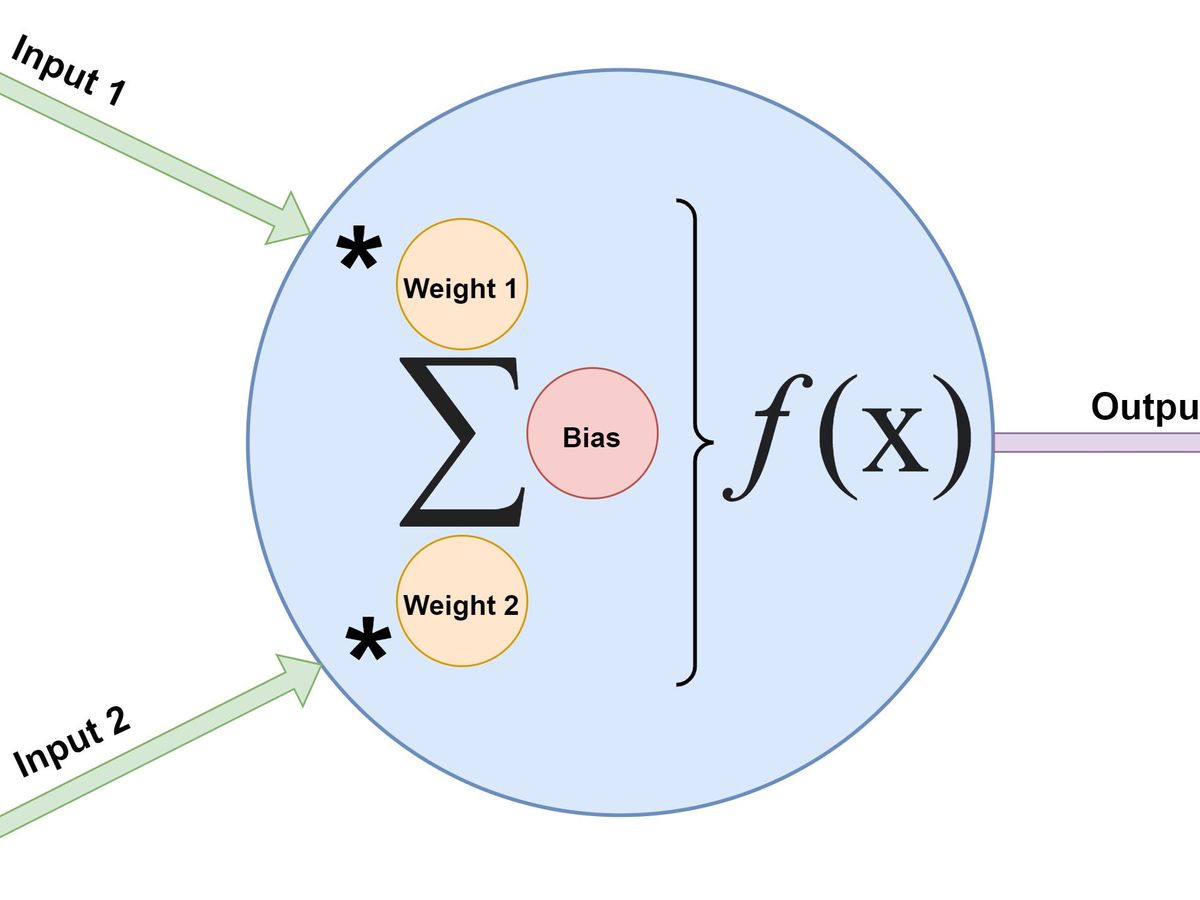
Backpropagation is an essential algorithm for training neural networks with many layers. It works in two main phases. In the first phase, inputs are propagated through the neural network to the final layer, a process known as direct feeding. In the second phase, the algorithm calculates an error and then back-propagates this error by adjusting the connection weights from the final layer to the first. This process is inspired by synaptic plasticityThis is how the brain modifies the strength of the connections between neurons to improve performance.
BackPropagation Through Time
Backpropagation through time is an extension of the backpropagation algorithm, used for recurrent neural networks. These networks allow connections between nodes to form a directed cycle, which is useful for processing sequences of data. The algorithm adjusts the weights of the connections over time, allowing the network to learn temporal patterns. This is crucial for tasks such as time series prediction and natural language processing.
Practical Applications
Backpropagation has numerous practical applications. It is used in speech recognition systems, computer vision and even games. The ability to adjust connection weights allows neural networks to learn from complex data, making them extremely versatile. Backpropagation was one of the main advances that enabled the creation of Deep Learning, which powers the majority of AI systems available worldwide.
Backpropagation has revolutionized the field of artificial intelligence, enabling the effective training of deep neural networks. Without it, many of the modern advances in AI would not be possible.
BrainOS: Machine Learning Framework
BrainOS is a machine learning framework which mimics the functioning of the human brain. It allows machines to learn on their ownIt can detect patterns without the need for human training. This is done by processing large amounts of data, known as Big Dataand the overlapping of non-linear processing layers.
Basic Neural Units of the Brain
Neurons
Neurons are the fundamental units of the human brain. They are made up of three main parts: dendrites, soma and axon. The dendrites receive signals from other neurons, the soma processes this information and the axon transmits the processed signal to other neurons. Each neuron can connect to thousands of other neuronsforming a complex communication network.
Synapses
Synapses are the connections between neurons. They allow signals to be transmitted from one neuron to another. There are two main types of synapses: chemical and electrical. Chemical synapses use neurotransmitters to send signals, while electrical synapses transmit signals directly through gap junctions. A synaptic plasticity is the ability of synapses to strengthen or weaken over time, which is crucial for learning and memory.
Action Potential
The action potential is an electrical impulse that travels along the axon of a neuron. It is generated when the neuron is sufficiently excited by incoming signals. This process involves the exchange of ions across the neuron's membrane, resulting in a rapid change in voltage. The action potential is essential for fast and efficient communication between neurons.
Understanding the basic neural units of the brain is fundamental to developing AI systems that mimic the complexity and efficiency of the human brain.
When Brain-Inspired AI Meets AGI
Artificial General Intelligence (AGI) is a type of artificial intelligence which can perform any intellectual task that a human being can. Unlike specific AI, which is designed for limited tasks, AGI has the ability to learn, understand and apply knowledge in different contexts.
Neural networks are the basis for many advances in AI, including AGI. Inspired by the workings of the human brain, these networks are made up of artificial neurons that process information in a similar way to biological neurons. This symbiotic relationship between the brain and AI allows AGI systems to become more efficient and adaptable.
Developing AGI presents several challenges, such as computational complexity and the need for large amounts of data. However, the opportunities are vast, including advances in areas such as health, education and technology. The search for AGI continues to be a promising field of research, with the potential to transform the way we interact with technology.
Deep Learning The Brain Behind Modern AI: Conclusion
Deep learning has revolutionized artificial intelligence, allowing machines to perform complex tasks with efficiency and precision. Inspired by the workings of the human brain, this field of AI uses neural networks to process information in a similar way to our nervous system. Despite the technical and conceptual challenges, the advances are remarkable and promise to transform many areas, from medicine to vehicle safety. The future of AI is promising, and deep learning will continue to be a key part of this journey of innovation and discovery.
Frequently Asked Questions
What is Deep Learning?
Deep Learning is an area of artificial intelligence that uses artificial neural networks to mimic the workings of the human brain.
How do artificial neural networks work?
Artificial neural networks are made up of layers of artificial neurons that process information in a similar way to the human brain.
What is BackPropagation?
BackPropagation is an algorithm used to train neural networks by adjusting the connection weights to minimize errors.
What are the challenges of deep learning?
The main challenges include computational complexity, the need for large amounts of data and the difficulty of interpreting the results.
What is BrainOS?
BrainOS is a machine learning framework that draws inspiration from the workings of the human brain to create more efficient AI systems.
What is the relationship between brain-inspired AI and AGI?
Brain-inspired AI seeks to mimic neural processes, which is an important step towards the creation of Artificial General Intelligence (AGI).




 Portuguese
  English